![[personal profile]](https://www.dreamwidth.org/img/silk/identity/user.png)
Book reviews
Jun. 16th, 2015 10:42 pmApparently I fill out book reviews quarterly?
The Whisper of Legends by Barbara Fradkin: This is an Inspector Green novel, but it wasn't my favourite in the series. Instead of the usual Ottawa setting, this is a fish-out-of-water cop in the wilderness of BC book... not really what I want from this series. Green spends most of it sadly incompetent as a city-boy and without much of a mystery to solve until right near the end.
The Fall Guy by Barbara Fradkin: I must have stuck this one on my list thinking it was a normal novel in a different series by this author, but it's actually a "quick reads" short story. The main character is a somewhat bumbling carpenter who - as with most cozies - gets implicated in a death and has to figure out what happened so he doesn't get sued (rather than jailed, which would be the more standard one). It was meh, if it hadn't been so short I probably wouldn't have finished it. It did improve somewhat, but there just isn't enough book for it to feel like it had more than sketched caricatures rather than fleshed characters.
Magic Rises by Ilona Andrews: This is part of a long running series that I normally really enjoy... but it's now suffering from the fact that the characters are too powerful in their home positions and normal circumstances, so to get some tension, this one takes Kate and Curran to Europe to deal with packs there. Plus, Kate's past that she's generally been hiding from (but not distractingly so) in the other books comes to the forefront. Darker than the earlier books in the series, though still enjoyable enough. Turns out I'm just not that keen on the big climactic battles as series start to wrap up.
A Slip of the Keyboard by Terry Pratchett: Didn't finish this collection of short essays. It suffered from too much of the same - it's just a bunch of pretty similar bits that Pratchett wrote for various publications and conventions over the years. There were probably a few things you could glean, but it's certainly not something I could sit and read through... and honestly, it was only going to dull my enjoyment of his fiction knowing his thoughts on the writing process. Probably best that I stopped.
Unbound by Jim C. Hines: The latest in the libriomancer series was... okay. Isaac is without his powers in this one, and honestly not that interesting because of it. His ridiculous team up buddies were kinda fun, and the book moves along quickly enough, but I didn't love the bad guy dynamic and I find that when the character is working on a puzzle that's unsolvable by the reader to be a little unexciting.
Chew [3] by John Layman: I continue to enjoy this comic book series. FDA agent who can see the history of things he eats, and his competent girlfriend who can describe foods so strongly that people taste them? Ridiculous and amusing.
The Doomsday Equation by Matt Richtel: Here's an unusual one - I didn't like the main character, but it didn't detract from my enjoyment of this book! He's a jerk of a Silicon Valley techie who is super wrapped up in himself and his software that predicts conflict... which fails when he field tests it. When it predicts a nuclear war he doesn't know if the software is still broken or if something terrible is coming, cue odd techno-nerd thriller from there. Enjoyable because he was believable enough and didn't need to be sympathetic for the story to work.
Karen Memory by Elizabeth Bear: This book is set in a steampunk historical west coast (Seattle/Portland/etc) city and features a main character who is a prostitute and all her coworkers, fighting against the (inevitably corrupt) mayor. I liked it! It gets a bit overly magical at the end (the tech is not believable), but I liked the writing and the characters.
Johnny Hiro by Fred Chao: A comic book about a young guy making a living in a town that is home to ninja gangs, dinosaurs, etc. Completely absurd but played relatively straight, this was a fun one with an appropriate art style.
Kop by Warren Hammond: In a future colony world where the economy has collapsed, a corrupt cop works to keep his corrupt chief in power. The setting of this one is pretty interesting - the colony world is very poor, but still has periodic interaction with rich offworlders/earthers... so while most of it is pretty low tech, there's a wide range on occasion. The main character isn't a particularly smart or good person, but he grows on you. I'm planning to keep on with the series.
Magic Breaks by Ilona Andrews: I think this is the Kate Daniels book where half of it is about her husband's ex-wife trying to ruin their marriage? If so, I didn't enjoy that. There's rare glimpses of the intelligence I expect from Kate and Curran (they do talk about what his ex-wife is doing, rather than being pissed off at each other all the time per her machinations), but it was a tiring read. Oh, and big-bad continues to be big and bad as the main story line, I guess.
Man of La Mancha [CD]: Apropos of nothing, I like the music from Man of La Mancha although my knowledge of the play and Don Quixote is meager.
Wicked [CD]: However, with the exception of the song "popular", which is fun, I don't like the music from Wicked. So dense. So repetitive. Maybe I'd be more inclined to it if I saw the musical, but I'm guessing I've got enough bias at this point that it'd be hard to turn enjoy.
A Natural History of Dragons by Marie Brennan: This is a book that is... hm... pride and prejudice with dragons, I suppose. I liked it a lot! The book is written as a memoir from the now old Lady Trent, describing her early life and obsession with learning about dragons. I enjoyed her scientific approach (very field naturalist) and even enjoyed the regency styling of the historical period. I'll be getting out more in the series - looking forward to seeing how she evolves into her older self through the stories.
Planetary [2] by Warren Ellis: Planetary continues to be a kinda weird comic book about super powered individuals. I enjoy it while I'm reading it but haven't developed any meaningful connection to the characters. The artwork is pretty good.
The Best Laid Plans by Terry Fallis: I wasn't sure I'd enjoy this book much. It's about a last-ditch candidacy run by a party insider for a candidate that doesn't want to be elected to parliament at all... so of course, a huge scandal breaks on the incumbent and this guy gets elected instead. It was marketed as being a funny look inside Canadian politics, but it came across more as a lefty-fantasy about unseating Jim Flaherty with a down-to-earth left wing professor who would turn parliament on its head, for the assumed-better. That said, I enjoyed it well enough for what it was - the characters were quirky and the climax amusing.
Legacy by Jeanne C. Stein: Oh dear, this series fell on its face. Weird "sexy" scenes, stupid issues that would have been solved by better communication, introduction of more supernatural things kinda pointlessly... not good. Plus, nothing of her doing her bounty hunter job, which was what made this series interesting. I'll not continue with this one, there's much better urban fantasy to be had.
My Fair Lady [CD]: I like the music from My Fair Lady well enough. Not as much as our band conductor, though!
Unsympathetic Magic by Laura Resnick: The library didn't have the second book in the Esther Diamond series, so I've skipped ahead to the third. This one was our aspiring actress getting caught up in a voodoo plot... not as good as the first one, but generally still an amusing romp. Would have liked more of the knowledgeable wizard friend and for the book not to have had such a ridiculous cover. Although it did stop a guy from continuing to talk to me on the bus when he asked what I was reading and I flipped it over...
Deadout by Jonathan McGoran: This is the second book in a series of weird eco-thrillers, the first of which I didn't like until the twist turned out not to be as preachy as I'd feared. For this second one, I didn't have that weighing on me, so I just played along as the author unspooled a weird story set in Martha's Vineyard with genetically modified bees and colony collapse and all that fun stuff. The main character is still dumb as a bag of bricks, so things just sort of happen around him while he gets in fights with random people. This one was straightforward and predictable as far as the evildoers' plot goes, which was a tad disappointing since the other one actually surprised me. I think continuing with this character is a mistake, though, and the stories would probably have been better as standalones. Now it just seems like weird eco-crises follow him around.
Valour and Vanity by Mary Robinette Kowal: This is somewhere in the series that is regency-with-magic where people can fold light to make images. The main characters are now happily married and doing well for themselves, which of course means they need to be attacked by pirates and be without their resources for most of the book. If you didn't get the sarcasm in text form, I promise it was there in my head. Then, later, the book turns into a heist story abruptly. There are a few novel uses of the magic, but that's about all there is to recommend this one. Earlier in the series was more satisfying.
The Whisper of Legends by Barbara Fradkin: This is an Inspector Green novel, but it wasn't my favourite in the series. Instead of the usual Ottawa setting, this is a fish-out-of-water cop in the wilderness of BC book... not really what I want from this series. Green spends most of it sadly incompetent as a city-boy and without much of a mystery to solve until right near the end.
The Fall Guy by Barbara Fradkin: I must have stuck this one on my list thinking it was a normal novel in a different series by this author, but it's actually a "quick reads" short story. The main character is a somewhat bumbling carpenter who - as with most cozies - gets implicated in a death and has to figure out what happened so he doesn't get sued (rather than jailed, which would be the more standard one). It was meh, if it hadn't been so short I probably wouldn't have finished it. It did improve somewhat, but there just isn't enough book for it to feel like it had more than sketched caricatures rather than fleshed characters.
Magic Rises by Ilona Andrews: This is part of a long running series that I normally really enjoy... but it's now suffering from the fact that the characters are too powerful in their home positions and normal circumstances, so to get some tension, this one takes Kate and Curran to Europe to deal with packs there. Plus, Kate's past that she's generally been hiding from (but not distractingly so) in the other books comes to the forefront. Darker than the earlier books in the series, though still enjoyable enough. Turns out I'm just not that keen on the big climactic battles as series start to wrap up.
A Slip of the Keyboard by Terry Pratchett: Didn't finish this collection of short essays. It suffered from too much of the same - it's just a bunch of pretty similar bits that Pratchett wrote for various publications and conventions over the years. There were probably a few things you could glean, but it's certainly not something I could sit and read through... and honestly, it was only going to dull my enjoyment of his fiction knowing his thoughts on the writing process. Probably best that I stopped.
Unbound by Jim C. Hines: The latest in the libriomancer series was... okay. Isaac is without his powers in this one, and honestly not that interesting because of it. His ridiculous team up buddies were kinda fun, and the book moves along quickly enough, but I didn't love the bad guy dynamic and I find that when the character is working on a puzzle that's unsolvable by the reader to be a little unexciting.
Chew [3] by John Layman: I continue to enjoy this comic book series. FDA agent who can see the history of things he eats, and his competent girlfriend who can describe foods so strongly that people taste them? Ridiculous and amusing.
The Doomsday Equation by Matt Richtel: Here's an unusual one - I didn't like the main character, but it didn't detract from my enjoyment of this book! He's a jerk of a Silicon Valley techie who is super wrapped up in himself and his software that predicts conflict... which fails when he field tests it. When it predicts a nuclear war he doesn't know if the software is still broken or if something terrible is coming, cue odd techno-nerd thriller from there. Enjoyable because he was believable enough and didn't need to be sympathetic for the story to work.
Karen Memory by Elizabeth Bear: This book is set in a steampunk historical west coast (Seattle/Portland/etc) city and features a main character who is a prostitute and all her coworkers, fighting against the (inevitably corrupt) mayor. I liked it! It gets a bit overly magical at the end (the tech is not believable), but I liked the writing and the characters.
Johnny Hiro by Fred Chao: A comic book about a young guy making a living in a town that is home to ninja gangs, dinosaurs, etc. Completely absurd but played relatively straight, this was a fun one with an appropriate art style.
Kop by Warren Hammond: In a future colony world where the economy has collapsed, a corrupt cop works to keep his corrupt chief in power. The setting of this one is pretty interesting - the colony world is very poor, but still has periodic interaction with rich offworlders/earthers... so while most of it is pretty low tech, there's a wide range on occasion. The main character isn't a particularly smart or good person, but he grows on you. I'm planning to keep on with the series.
Magic Breaks by Ilona Andrews: I think this is the Kate Daniels book where half of it is about her husband's ex-wife trying to ruin their marriage? If so, I didn't enjoy that. There's rare glimpses of the intelligence I expect from Kate and Curran (they do talk about what his ex-wife is doing, rather than being pissed off at each other all the time per her machinations), but it was a tiring read. Oh, and big-bad continues to be big and bad as the main story line, I guess.
Man of La Mancha [CD]: Apropos of nothing, I like the music from Man of La Mancha although my knowledge of the play and Don Quixote is meager.
Wicked [CD]: However, with the exception of the song "popular", which is fun, I don't like the music from Wicked. So dense. So repetitive. Maybe I'd be more inclined to it if I saw the musical, but I'm guessing I've got enough bias at this point that it'd be hard to turn enjoy.
A Natural History of Dragons by Marie Brennan: This is a book that is... hm... pride and prejudice with dragons, I suppose. I liked it a lot! The book is written as a memoir from the now old Lady Trent, describing her early life and obsession with learning about dragons. I enjoyed her scientific approach (very field naturalist) and even enjoyed the regency styling of the historical period. I'll be getting out more in the series - looking forward to seeing how she evolves into her older self through the stories.
Planetary [2] by Warren Ellis: Planetary continues to be a kinda weird comic book about super powered individuals. I enjoy it while I'm reading it but haven't developed any meaningful connection to the characters. The artwork is pretty good.
The Best Laid Plans by Terry Fallis: I wasn't sure I'd enjoy this book much. It's about a last-ditch candidacy run by a party insider for a candidate that doesn't want to be elected to parliament at all... so of course, a huge scandal breaks on the incumbent and this guy gets elected instead. It was marketed as being a funny look inside Canadian politics, but it came across more as a lefty-fantasy about unseating Jim Flaherty with a down-to-earth left wing professor who would turn parliament on its head, for the assumed-better. That said, I enjoyed it well enough for what it was - the characters were quirky and the climax amusing.
Legacy by Jeanne C. Stein: Oh dear, this series fell on its face. Weird "sexy" scenes, stupid issues that would have been solved by better communication, introduction of more supernatural things kinda pointlessly... not good. Plus, nothing of her doing her bounty hunter job, which was what made this series interesting. I'll not continue with this one, there's much better urban fantasy to be had.
My Fair Lady [CD]: I like the music from My Fair Lady well enough. Not as much as our band conductor, though!
Unsympathetic Magic by Laura Resnick: The library didn't have the second book in the Esther Diamond series, so I've skipped ahead to the third. This one was our aspiring actress getting caught up in a voodoo plot... not as good as the first one, but generally still an amusing romp. Would have liked more of the knowledgeable wizard friend and for the book not to have had such a ridiculous cover. Although it did stop a guy from continuing to talk to me on the bus when he asked what I was reading and I flipped it over...
Deadout by Jonathan McGoran: This is the second book in a series of weird eco-thrillers, the first of which I didn't like until the twist turned out not to be as preachy as I'd feared. For this second one, I didn't have that weighing on me, so I just played along as the author unspooled a weird story set in Martha's Vineyard with genetically modified bees and colony collapse and all that fun stuff. The main character is still dumb as a bag of bricks, so things just sort of happen around him while he gets in fights with random people. This one was straightforward and predictable as far as the evildoers' plot goes, which was a tad disappointing since the other one actually surprised me. I think continuing with this character is a mistake, though, and the stories would probably have been better as standalones. Now it just seems like weird eco-crises follow him around.
Valour and Vanity by Mary Robinette Kowal: This is somewhere in the series that is regency-with-magic where people can fold light to make images. The main characters are now happily married and doing well for themselves, which of course means they need to be attacked by pirates and be without their resources for most of the book. If you didn't get the sarcasm in text form, I promise it was there in my head. Then, later, the book turns into a heist story abruptly. There are a few novel uses of the magic, but that's about all there is to recommend this one. Earlier in the series was more satisfying.
 This is the third book in the In-cryptid series, which is basically about a family of people who work with "mythical" type creatures in current times - like boogeymen, yeti, gorgons, etc. Typically, that means helping them keep hidden but integrated into society, and hunting down ones that are dangerous to the general population.
 The Jennifer Morgue is the second-ish book in the Laundry Files series by Charles Stross. I previously reviewed the first one and quite enjoyed it... this one, less so. By the by, I'm tagging by author at the bottom of posts now to make it easier to hop back to old related reviews. Not quite as classy as finding the link and adding it in the post itself, but it's something.
 Brute Strength is the 19th (!) book in the Holly Winter's series, aka, the dog mysteries with the malamutes. I suspect I haven't read every book, but I must have read a lot of them. I think we slowed down on them because the reintroduction of the characters became too repetitive, but having been away from the series a while now, I didn't feel that way about this book.
 This is the fourth book in the Walt Longmire series. I'm quite a bit behind since I'd accidentally got on the waiting list at the library on an original copy of the book: they've since been re-released with the TV series branding so more copies are available, but if you were on the other list, you didn't get offered them. It's worth checking if you've been waiting for a series.
 This Thing of Darkness is the 7th in the Inspector Green mystery series.
 Broken Homes is the fourth of the Rivers of London (aka Midnight Riot) series - a British urban fantasy (cops + magic) series that I've strongly recommended in the past.
 Starters is a post-apocolyptic young adult novel. The concept is that there was a war with bioweapons that the US was only partially prepared for: they vaccinated the young and the elderly, but hadn't got to the main working-age population before the weapons hit cities. The book starts a few years after this, with the population now divided into "starters" (0-18) and "enders" (80+, it seems... up to 200, apparently this is a future with extended lifetimes).
 I read this book because it was available free as an ebook, but I can't really recommend it. It's a coming of age / discovery of magic novel with a backdrop of gang violence and... elves. Uh. Honestly, I feel like if it had gone with just the gangs + magic, I probably would have liked it more. The whole book never quite fit together in my mind.
 I don't quite recall how I stumbled upon London Falling - most likely a blog post? This is the hazard of putting books on a "for later" list and not getting them until months after. It's the first of a series - the second of which will come out in a few days (May 22, presuming North American release is the same time as the UK one).
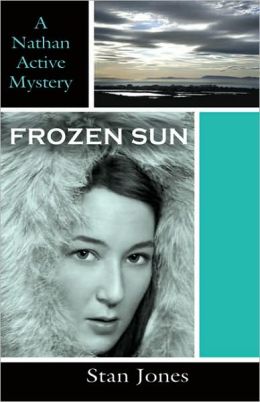 Frozen Sun is the third of the Nathan Active mysteries, set in Alaska. I read the previous one and thought it was okay. This one is better - I didn't want to put it down (it's not a long book, mind) until the mystery was resolved, so that was great.
 Proven Guilty is the 8th book in The Dresden Files series. I've not read every book in the series, though I am moving forward chronologically... you may recall, I didn't much care for the last one I read and I put the series down for a while in response.
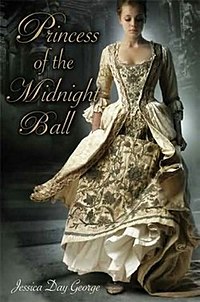 Princess of the Midnight Ball is a retelling of the fairytale "The Twelve Dancing Princesses". I'm not familiar with the original tale, and I didn't look it up before reading the book (though I did just read the wikipedia page now).
 MaddAddam is the third and final novel in Atwood's post-apocalyptic series that started with Oryx and Crake. I read the second one (The Year of the Flood) relatively recently and found it underwhelming, you may recall. I'm happy to say that this one did improve my overall impression of the series, though I suspect that I enjoyed the first novel most.
